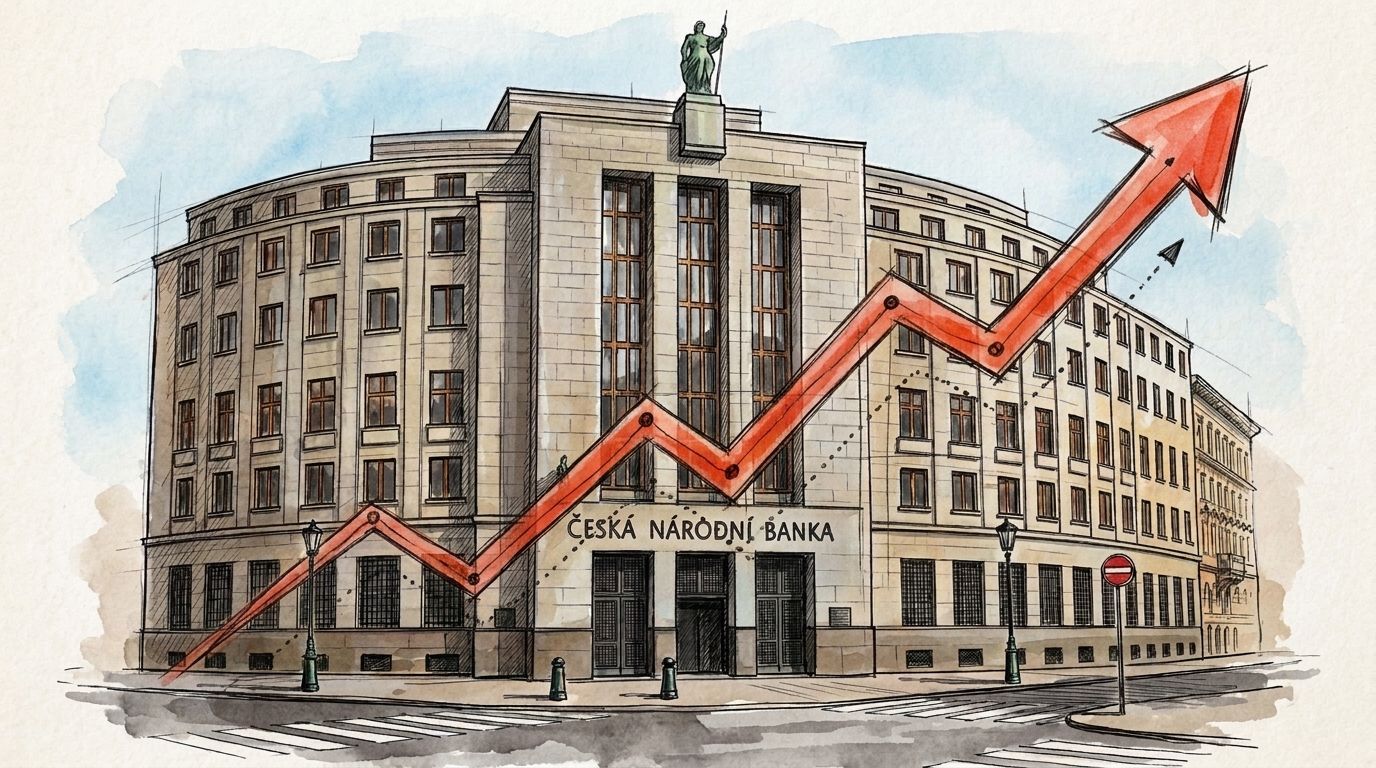
At the start of November 2026, 6,038 Prague flats were listed for sale on the largest Czech property portal: 55% more than in January and 35% more than a year earlier. Prices have not come down with them. Resale flats were listed about 6% higher in Q3 2026 than a year before. On 5 November the Czech National Bank raised its main interest rate to 4%, and its own forecast shows no meaningful cuts in 2027. For buyers, that means more choice and more room to negotiate.
How many flats are for sale in Prague
By our own monthly count on the largest Czech property portal, 6,038 flats were for sale in Prague at the start of November 2026. In January there were 3,897, and in November 2025 there were 4,461. The number has grown almost every month since spring.
Rental listings have grown more slowly. In early November 2026, 3,472 Prague flats were listed for rent, 9% more than a year earlier. There are now 1.7 flats for sale for every flat for rent, up from 1.4 a year ago and roughly one in summer 2025.
The rise is not limited to Prague. Across the Czech Republic, 21,649 flats were listed for sale in early November 2026, up from 17,194 in September.
We see two main reasons. Developers have the most unsold new flats in Prague in a decade, about 7,200 at the end of September 2026. And fewer people are buying with a mortgage: Czech banks and building societies issued 5,995 new mortgages in September 2026, 12% fewer than a year earlier. Flats take longer to sell, so listings pile up.
Prices are holding
More listings have not brought prices down yet. Resale flats (anything that is not a new build) were listed at an average of CZK 163,043 per m² in Q3 2026, about €6,700. That is 2% more than in Q2 and 6% more than a year earlier, although growth has slowed since the first half of the year.
New builds are rising faster. Developers asked an average of CZK 193,814 per m² (about €8,000) in Q3 2026, 12% more than a year earlier, even though they sold 11% fewer flats from January to September. We look at why in Prague has the most new flats for sale in a decade.
Rents are rising gently. The average asking rent in Prague was about CZK 460 per m² a month in Q3 2026 (about €19), 4% more than a year earlier.
In our experience, the bigger supply shows up mainly in negotiations. On flats that have been listed for more than two months, sellers are now much more open to talking about the price. Good small flats in popular areas still sell fast, and their prices have barely moved. We covered what this means for buyers in Prague's property headlines have turned.
What the Czech National Bank decided
On 5 November 2026 the board of the Czech National Bank (ČNB) raised the two-week repo rate, its main interest rate, from 3.75% to 4%. The previous rise came in June 2026. The reason is inflation, which reached 2.5% in September 2026 against a 2% target.
The vote was close: four of the seven board members backed the rise, and three wanted to hold. The governor said the move does not start a new cycle of rate rises, but the bank did not rule out another one. Its new forecast has inflation above 3% for most of 2027 and interest rates staying roughly where they are, with cuts only in 2028.
For the housing market, what matters is the cost of mortgages. Czech mortgage rates have been rising since spring: the average advertised rate was 5.79% in early October 2026, up from 4.89% in March. On a CZK 6 million (about €247,000) loan over 30 years, that adds about CZK 3,400 (€140) to the monthly payment. Banks had priced in the November rise in advance, so the decision itself will not push mortgage rates much higher. They are unlikely to fall in the coming months either.
If you are buying with cash or with financing from abroad, the rate rise does not affect you directly. It does limit how much local buyers can borrow, and that is where your negotiating room comes from.
Two scenarios follow from this:
- If rates stay around today's level through 2027, as the ČNB expects, fewer buyers will be able to borrow and supply will stay high. Prices would then more likely flatten than rise.
- If inflation slows faster and the ČNB starts cutting sooner, buyers will return, supply will shrink and prices will start rising faster again.
Neither is certain. Today's data points more to the first.
Our advice
Buying a home to live in
Don't try to time the market. If you have found a flat that suits you, and your budget would survive a higher mortgage rate when a fixed period ends, timing is secondary. Use the larger supply to negotiate, especially on flats that have been listed for a while. What you will pay on top of the purchase price is covered in How much does it cost to buy a flat in Prague in 2026?
Buying to let
Right now we recommend buying a flat to rent out and later sell only with a long-term horizon. Gross rental yields across Prague are about 3.4% a year by our October analysis of listings, so most of the return has to come from the flat's value rising. Over a short period, that cannot be guaranteed. With supply rising and prices flat, a flat bought above market value can even lose value in the first few years, and if you had to sell early, you could sell at a loss.
So be very careful about the price right now. Compare every flat with similar flats nearby and buy only at or below market value. The growing supply gives you time to choose and negotiate. Buy nothing bigger than a 2+kk of around 60 m², ideally a 1+kk of 30–40 m² (a 1+kk is a one-room flat with a kitchen corner, a 2+kk has a separate bedroom). Small flats are what both tenants and buyers want most, so they are easier to let and to sell.
Selling
Sellers now compete with far more listings than a year ago. Well-priced flats still sell, but an overpriced one sits for months and usually ends up discounted anyway. Set the price by what comparable flats actually sold for, not by the highest asking prices, and get the flat ready before the photos. If you have a budget for renovation, we recommend doing it before you sell: renovated flats sell much more easily.
Letting
There are 9% more flats for rent in Prague than a year ago, and rents are rising slowly, so landlords face more competition. Set the rent by comparable flats nearby: a month without a tenant usually costs more than a slightly lower rent.