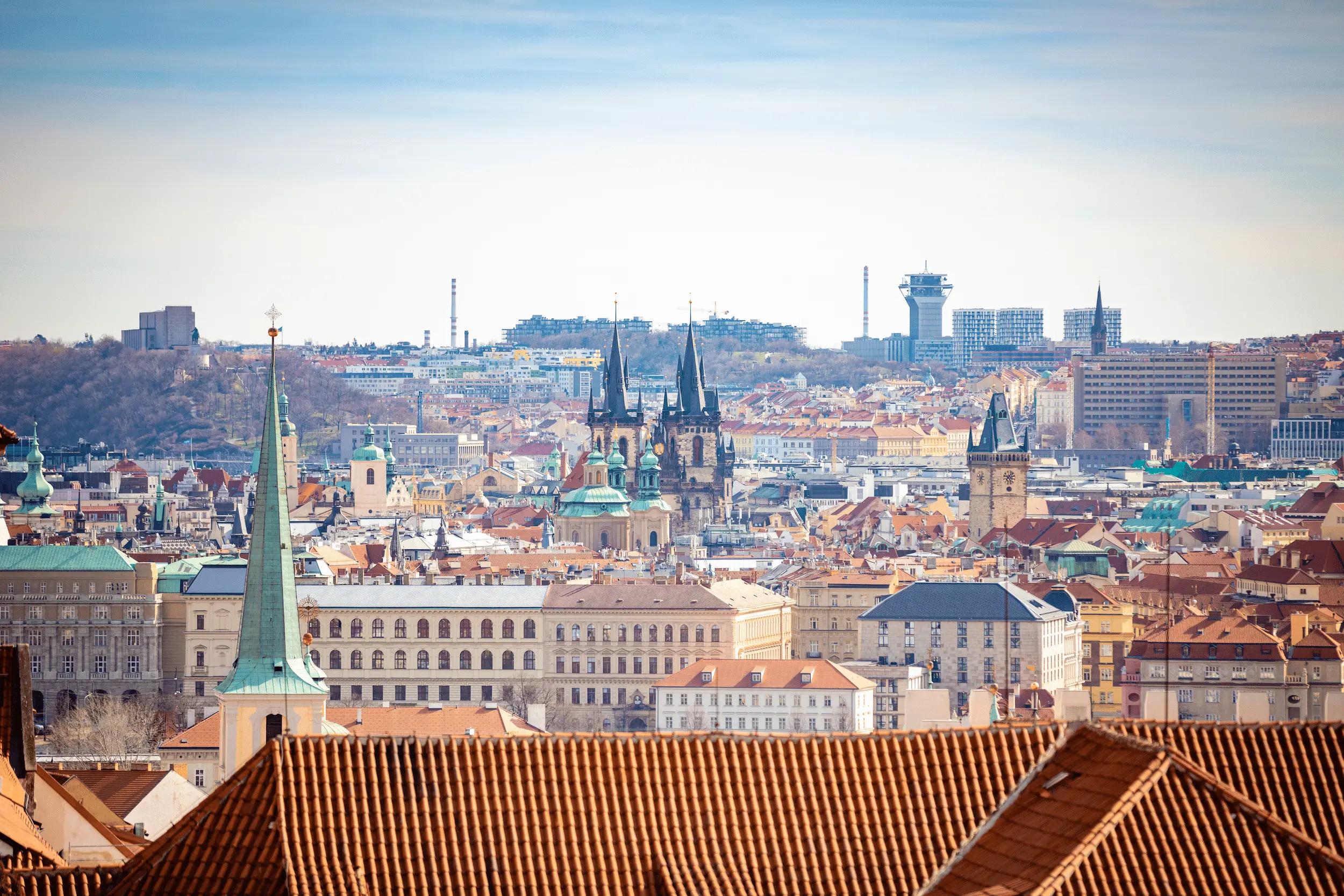
For years, Prague carried the reputation of being one of Europe’s best-kept secrets: a beautiful historic capital that was not only charming but also cheap. Many newcomers still imagine they’re moving to a “low-cost Eastern European city.” The truth in 2025, however, is more nuanced.
Prague today is modern, vibrant, and offers excellent quality of life. But cheap? That depends. How affordable Prague feels largely comes down to your background: are you arriving from London or New York, or from Warsaw or Bucharest? Are you earning a Czech salary, or being paid abroad in euros or dollars?
To answer the question, let’s take a closer look at the real cost of living in Prague across the main categories: housing, groceries, dining out, transport, healthcare, and lifestyle.
Housing in Prague
Housing remains the single biggest expense for most residents.
Renting
- A basic studio in a non-central neighborhood such as Vršovice will cost between 14,000–22,000 CZK (€575–900 / $670–1,060) per month.
- In central or upscale areas, expect 19,000–26,000 CZK (€780–1,065 / $915–1,250) or more.
- A 90 sqm three-room apartment runs 30,000–50,000 CZK (€1,230–2,050 / $1,440–2,400) in an average neighborhood, and 35,000–60,000 CZK (€1,435–2,460 / $1,680–2,885) in the city center.
- On top of rent, factor in 3,000–5,000 CZK (€123–205 / $145–240) for utilities and internet.
Buying
- The average purchase price in Prague now sits around 160,000 CZK per square meter (€6,560 / $7,695).
- A studio in Vinohrady or the city center will set you back 6.5–9 million CZK (€266,000–369,000 / $312,000–433,000), while a 90 sqm flat costs 15–20 million CZK (€615,000–820,000 / $721,000–961,000).
- In Libeň (an average neighborhood), studios typically sell for 6–8 million CZK (€246,000–328,000 / $288,000–385,000), with larger flats at 13–18 million CZK (€533,000–738,000 / $625,000–865,000).
- On the outskirts, in older panelák buildings in places like Černý Most, studios are 5–6.5 million CZK (€205,000–266,000 / $240,000–312,000) and larger flats 8.5–10 million CZK (€348,000–410,000 / $408,000–481,000).
Because demand is so high, some foreigners actually find it easier to buy than rent. But note that mortgage payments are currently about 50% higher than rent. In fact, by income-to-housing ratio, Prague is now the third most expensive city in Europe, behind only Amsterdam and Athens. It takes over 15 annual Czech salaries to buy an average flat here.
If you're considering buying, we offer a number of buyer's agent services.
Groceries and Food
Groceries are another area that catches many newcomers by surprise. Despite Prague’s central location, food prices are often higher than in neighboring Poland or Germany — something Czechs complain about frequently.
A typical weekly shop for two people comes to 2,000–5,000 CZK (€82–205 / $96–240), depending on your shopping habits.
To give you an idea:
- Milk costs about 22 CZK (€0.90 / $1.05)
- Bread: 30–60 CZK (€1.25–2.45 / $1.45–2.90)
- Eggs (10): 65 CZK (€2.65 / $3.15)
- Cheese: 35–60 CZK per 150g (€1.45–2.45 / $1.70–2.90)
- Coffee beans: 250–350 CZK per 250g (€10.25–14.35 / $12–16.80)
Eating Out
Dining out is where Prague still shines in value compared to Western capitals.
- A daily lunch menu in a typical restaurant costs about 250-300 CZK (€12 / $14) including a drink.
- A dinner for two at a mid-range spot with drinks will run 800–1,200 CZK (€33–49 / $38–58).
- A cappuccino is around 80 CZK (€3.30 / $3.85).
- A beer in a pub is roughly 70 CZK (€2.85 / $3.35), though cheaper options abound outside the center.
Transport
Public transport in Prague is consistently ranked among the best in Europe — and it’s remarkably affordable.
- Annual pass: 3,650 CZK (€150 / $175)
- Monthly pass: 550 CZK (€22.50 / $26.50)
- Single ride: 30 CZK (€1.25 / $1.45)
If you drive, however, costs rise: fuel is about 38 CZK per liter (€1.55 / $1.85) and central parking can be both expensive and frustrating.
Read more about transport in this article.
Healthcare
Healthcare costs depend heavily on your residency and work status:
- Employees are typically covered by Czech public health insurance, which gives access to most basic services.
- Freelancers and digital nomads usually need private insurance, costing 1,500–4,000 CZK (€61–164 / $72–192) per month.
- Out-of-pocket private care, including dentists, is still generally cheaper than in Western Europe or the United States.
Lifestyle and Entertainment
Prague offers a lively cultural and social scene, often at very reasonable prices.
- A gym membership averages 1,300 CZK (€53 / $62.50) per month.
- A cinema ticket is about 300 CZK (€12.30 / $14.40).
- Concerts, exhibitions, and outdoor events are often free or inexpensive, especially in summer.
Between the city’s parks, hiking trails, cycling routes, and world-class classical music, it’s easy to enjoy a rich lifestyle without overspending.
So, Is Prague Still Cheap?
So, is Prague a cheap place to live? The answer is both yes and no.
For those earning a Czech salary, especially in junior positions, Prague can feel expensive, particularly in terms of housing and groceries.
For those earning in euros, dollars, or pounds, the city remains relatively affordable — and when you factor in the safety, transport, cultural life, and access to nature, Prague still delivers excellent value.
It may no longer be the budget destination of the past, but for many, Prague in 2025 offers a balance of cost and quality of life that’s hard to beat.
Need Help with Prague Real Estate?
Whether you’re looking to rent out your property, buy, sell, or manage property in Prague or Central Bohemia, my team at Vanek Real Estate specializes in helping foreigners navigate the Czech property market.