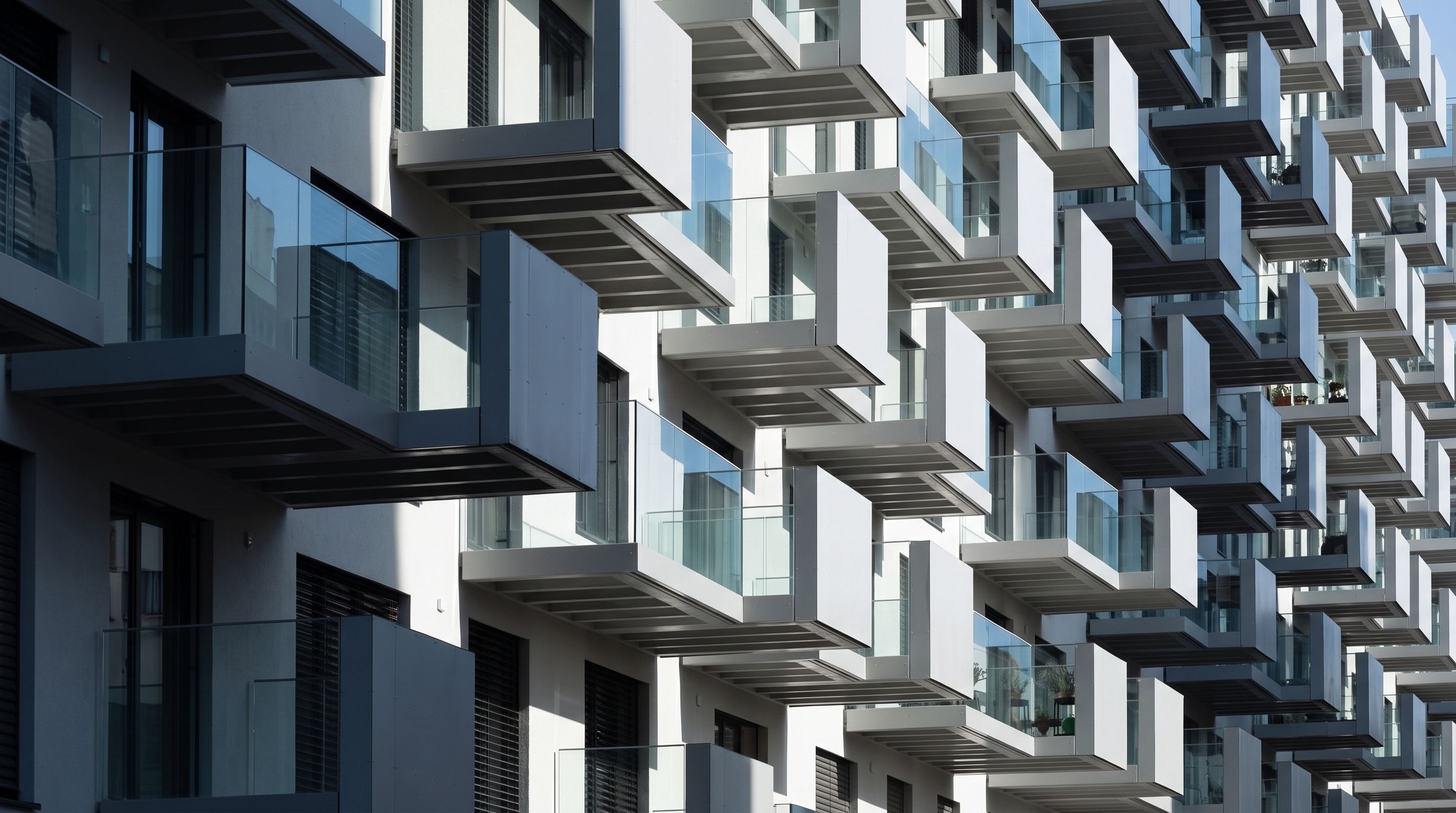
If you want to live in a completely new neighbourhood in Prague, parts of Vysočany may be your best option right now. Thousands of new flats have gone up on the site of the old factories in the last twenty years, with new parks, playgrounds and a new primary school, and more are being built. For a long time Vysočany was seen as a working-class district, and some of it still is: the old parts need to be judged street by street and building by building.
What it is like to live in Vysočany
Vysočany covers about 6 km² of Prague 9 and had 17,465 residents at the 2021 census. It grew around factories: a sugar refinery from 1835, then the engineering works of Emil Kolben from 1896, later ČKD, which built locomotives and machinery for most of the Eastern Bloc. Vysočany became a town in 1902 and part of Prague in 1922. Families came for the factory jobs and built workers' colonies, and for most of the 20th century the district was known for smoke, railway yards and factory halls rather than for housing.
After 1990 heavy industry wound down and the halls stood empty. Since the mid-2000s they have been replaced by housing. The first new neighbourhood, Nová Harfa, went up from 2005, and the former ČKD site along Kolbenova street is now being turned into several thousand more.
The result is a district of contrasts. The new parts look like a modern European city: blocks of flats around green courtyards, new streets, playgrounds and cafés on the ground floors. A few minutes' walk away you can find pre-war apartment buildings, prefab blocks from the 1970s, small family houses, warehouses and the odd preserved factory hall. Some of these streets are pleasant and some are still rough.
The parts of Vysočany
In our experience Vysočany falls into five residential parts. The new neighbourhoods are the reason most people look here; the older parts need much more care.
Nové Vysočany: the former ČKD site along Kolbenova
Between the Vysočanská and Kolbenova metro stations, roughly within the streets Kolbenova, Freyova, Poděbradská and Kbelská, several thousand flats have been built or are under construction on the land of the former ČKD works. The largest project alone is planned at about 5,000 flats over roughly ten years, and building will continue until at least 2029. The new streets come with what families need: the new Elektra primary school, Park Zahrádky between Kolbenova and Poděbradská, which has what we consider the best free playground in Prague and is being extended, and a riverside area along the Rokytka stream. The trade-off is that for the next few years you will live next to building sites.
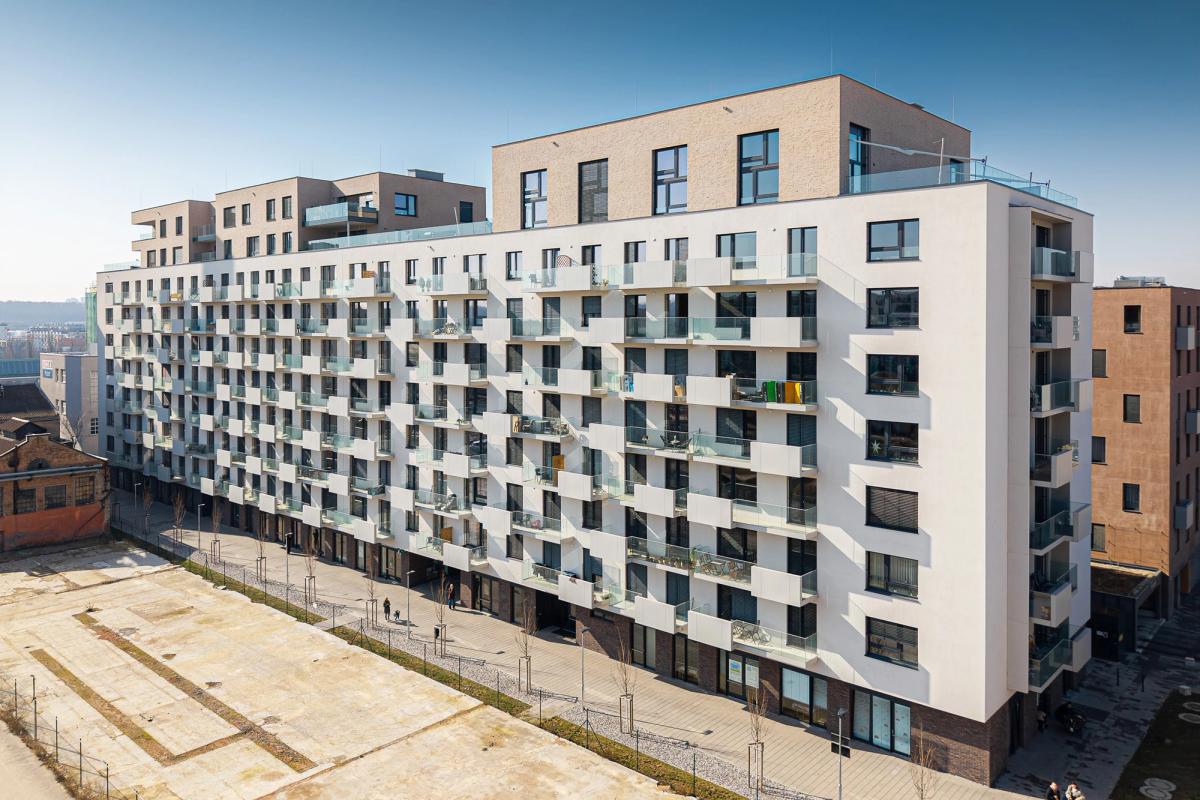
Nová Harfa, near the O2 arena
The first new neighbourhood, built from 2005, with about 2,000 flats between Českomoravská and Poděbradská. It is finished and settled: the trees have grown, the playgrounds and the park are in place, and the O2 arena, two shopping centres and the Českomoravská metro station are close by. A cycle path runs along the Rokytka on the line of a former railway. If you want a new neighbourhood that is already complete rather than one still being built, start here.
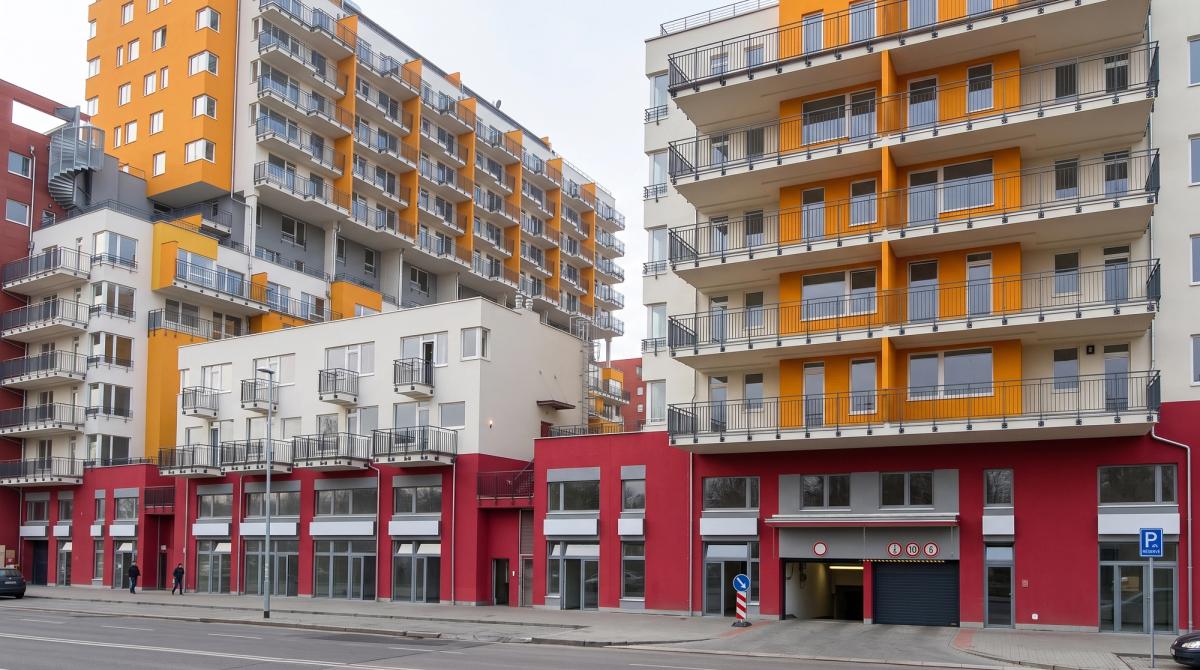
Old Vysočany around náměstí OSN
The original town centre around the Vysočanská metro station and náměstí OSN. Shops, services and transport are all here. The housing is mixed: pre-war apartment buildings, post-war blocks and newer infill side by side. This is where the working-class past is most visible, and where prices are lower.
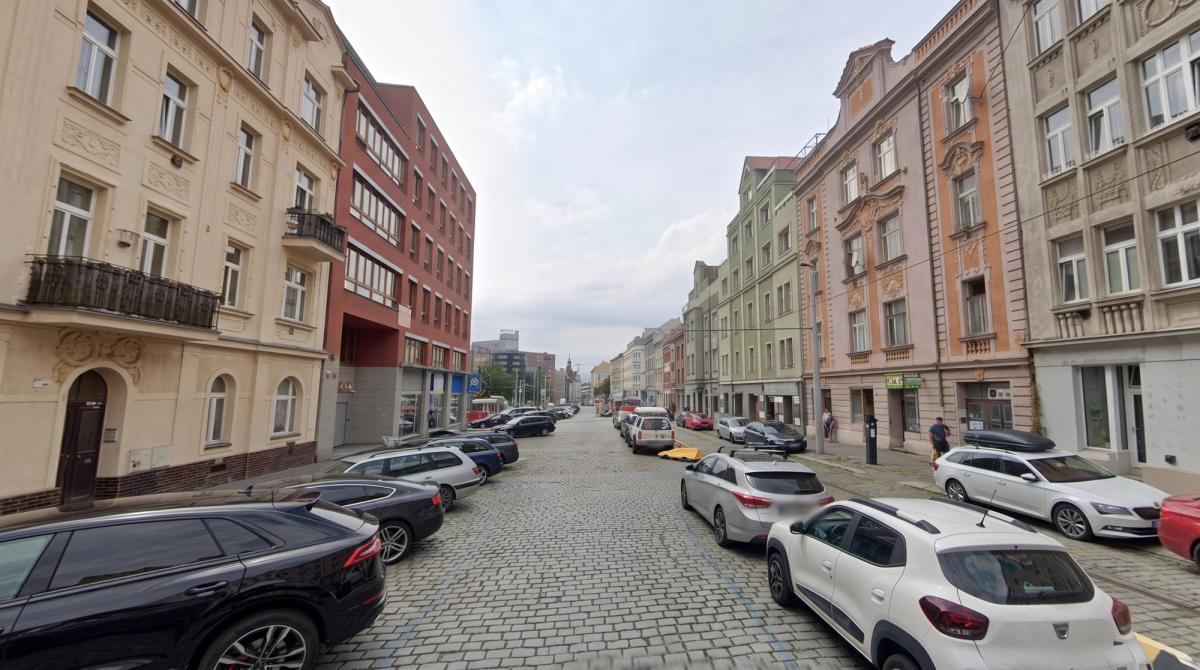
The northern slope: Podviní and up towards Prosek
The streets that climb from the Rokytka towards Prosek, around Na Jetelce, Odkolkova and Nad Krocínkou, are some of the quietest in Vysočany. Street names such as Na vysočanských vinicích recall the vineyards that once covered the slope. Family houses, small apartment buildings and a few new projects stand side by side. Park Podviní at the foot of the slope has ponds, bridges over the stream and a playground built like a stone castle.
The south-west towards Žižkov
The older streets around Spojovací, Malletova and Novovysočanská, on the slope below Žižkov, have mostly pre-war and post-war housing with green slopes and allotments nearby. Prices are usually lower than in the new neighbourhoods, and quality varies a great deal from building to building.
The north-eastern tip of Vysočany, towards Letňany, is mostly industry, logistics and railway, with very few homes.
How to judge the older parts
In the old parts of Vysočany you can come across almost any type of building, and not all of them are good. Look at what kind of building it is (a solid pre-war house, a prefab block, a converted industrial building, a 1990s infill) and how it has been looked after. Pay just as much attention to the feel of the street: there are still some streets we would not recommend, sometimes only a few hundred metres from a new development.
If you are unsure about a particular street or building, get in touch. We can usually tell you straight away.
Safety
Vysočany is safe, like the rest of Prague, and the new neighbourhoods are full of families with children. What differs is the feel of individual streets, as described above. Before you buy, walk the street in the evening as well as during the day.
Parks and green space
Green space is one of the strong points of Vysočany. Park Podviní along the Rokytka, mostly on the Libeň side, is the largest of them. The Rokytka itself has a cycle and walking path through the district. In our view, Park Zahrádky between Kolbenova and Poděbradská has the best free playground in Prague. Its centrepiece is a climbing castle with tall towers and tube slides, with rope playgrounds for younger and older children, a sunken trampoline and swings for toddlers spread out around it, plus a kiosk with toilets and paths along the Rokytka. The park is growing with the new neighbourhood, and the new developments come with their own courtyards and playgrounds. Further out, the Smetanka nature park and the slopes towards Prosek are within cycling distance.
Families: schools and nurseries
The Elektra primary school, opened in 2023, has 800 places plus a kindergarten with 78 places, a gym and a sports pitch on the roof. It is one of very few new schools Prague has built since the 1990s, and Prague 9 plans a second school on the neighbouring plot. Public schools admit children by catchment area based on the family's registered address, so check which school a street belongs to.
Where thousands of new flats arrive at once, nursery places can run short for a few years. If you have small children, ask the local nurseries about capacity before you buy.
Noise, construction and floods
The main noise sources are the busy roads (Kolbenova, Poděbradská, Kbelská and Českomoravská), the railway lines that cross the district, concerts and events at the O2 arena, and, in Nové Vysočany, construction that will continue for several years. Check what is planned on the plots around a flat before you buy, because a view over an empty lot today may be a view of the next building tomorrow.
The low-lying streets along the Rokytka stream lie in its official flood zone. Since the 2002 floods, the mouth of the Rokytka has had flood gates that protect the lower part of Libeň, but for a specific building, check the city's flood-zone map.
Getting around and parking
Metro line B runs through Vysočany with three stations: Českomoravská, Vysočanská and Kolbenova. From Vysočanská it is five stops to Florenc and seven to Můstek in the centre. Trams run along the main streets, and regional trains stop at the Praha-Vysočany and Praha-Libeň stations.
Parking is easier than in the inner districts. The whole of Prague 9 is a paid parking zone, and in 2026 a resident permit costs 600 Kč a year for the first car. Most new buildings have their own garage spaces, usually sold separately from the flat.
New builds and older flats: what to check before you buy
Buying a new flat here usually means buying from a developer, often before the building is finished:
- Read the contract carefully. Off-plan purchases are usually made under a future purchase agreement with payments spread over the construction. Check the completion date, what happens if it slips, and what exactly the price includes.
- Look at the developer's finished buildings in the area and how they have aged.
- At handover, record every defect in the handover protocol. Snagging is normal in new buildings; what matters is that it is written down.
- Ask about the monthly costs: the repair fund, building management and the service charge for shared areas and garages.
For an older flat, everything above about the building and the street applies, plus the usual checks: the repair fund, the minutes of the owners' meetings, and whether the flat is legally a flat. Converted industrial buildings and lofts are sometimes registered as non-residential space, which can complicate a mortgage and a later sale. Our guide to how buying a flat in Prague works explains the steps from reservation to handover.
What it costs
Flats in Prague 9 sold for an average of CZK 146,600 per m² in the first half of 2026, based on purchase contracts recorded in the land registry, up 6.0% on the second half of 2025. New flats in Prague 9 were advertised at about CZK 171,000 per m² in the second quarter of 2026. Asking rents in Prague 9 averaged 468 Kč per m² a month in the second quarter of 2026, up 3.8% on the previous quarter, the largest rise of any central district. For a new 55 m² 2+kk that means a price of about CZK 9.4 million and a rent of about 25,700 Kč a month before utilities.
For the wider picture, see our articles on what a flat costs in Prague in 2026 and average rent by district.
Our take
For investors
Vysočany suits investors who want a new build with a reasonable return. As a model example, a new 2+kk bought at the Prague 9 average for new flats and let at the Prague 9 average rent earns a gross yield of about 3.3% before costs. That is more than in the premium inner districts, and you get a flat with a lift, a balcony, low energy bills and usually a garage space, in a district where rents rose faster than in any other central district in the second quarter of 2026.
Our usual rules apply. We advise investors not to buy anything above about 60 m² without a specific reason; if you plan to sell in around ten years, a 1+kk of 30 to 40 m² is the best choice. In the old parts of Vysočany, buy only if you are absolutely sure about both the price and the micro-location.
For people who want to live there
The new neighbourhoods of Vysočany are especially well suited to families with children: a new flat with a lift and a balcony, a new school, playgrounds and parks within walking distance, parking you can actually find, and the metro to the centre. They also suit anyone who wants to live in a completely new part of Prague at prices well below the inner districts.
Vysočany suits less well if you want historic streets and a city that is already finished, or if you would mind a few more years of construction around you.
For a home, fit matters more than the last few percent of the price. In Vysočany, though, the micro-location matters as much as the flat itself: visit the street, look at the plans for the plots around it, and ask us if you are unsure.