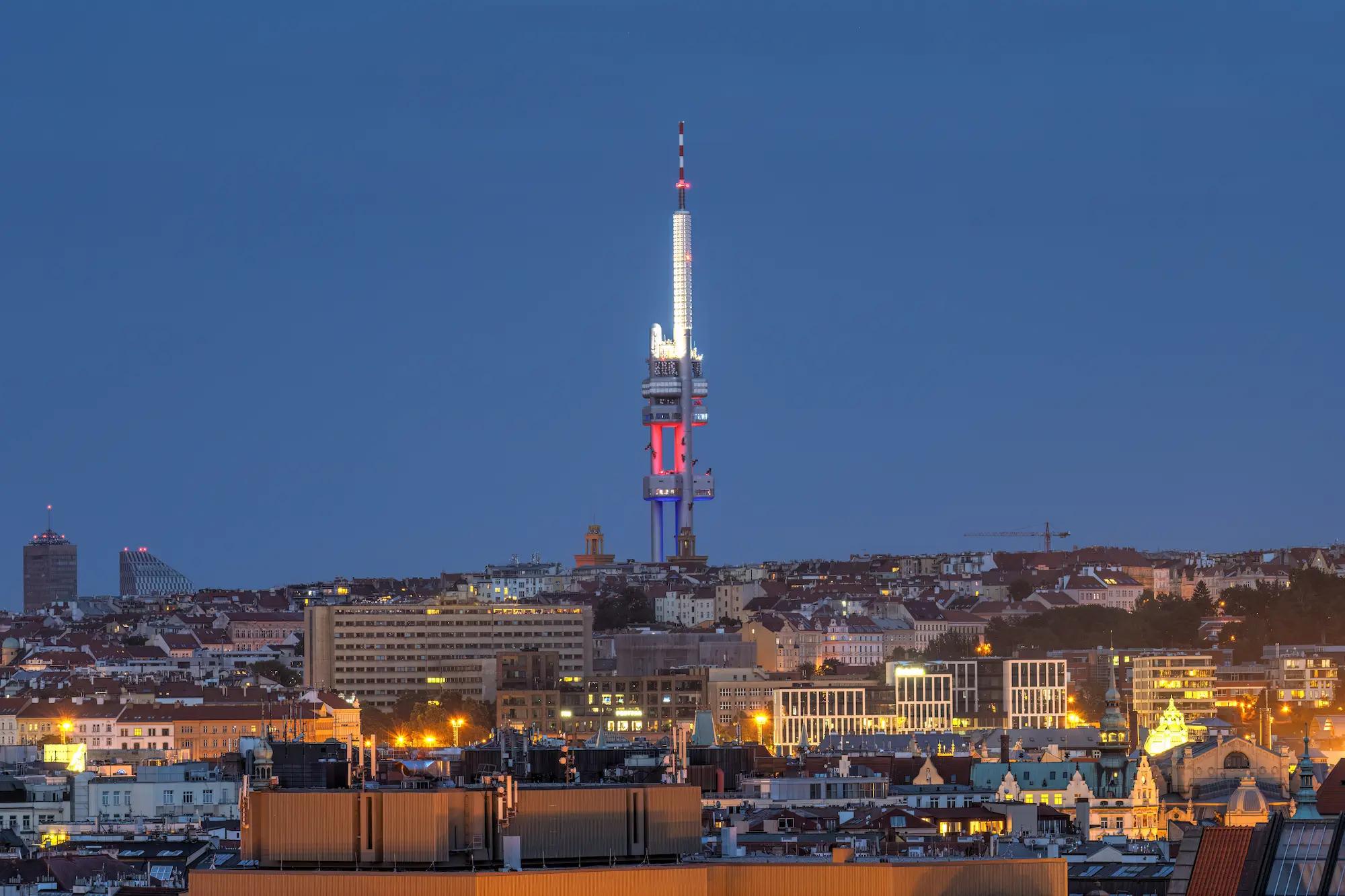
If you've been hoping the Prague real estate market would finally start cooling down in 2026, the data — and my own experience on the ground — suggests the opposite. The market at the end of Q1 2026 remains extremely competitive, particularly for smaller apartments, where prices are still rising and well-priced properties are disappearing within days of listing.
Rather than giving you abstract statistics, I want to walk you through three real transactions I handled for clients in Q1 2026. Each one illustrates a different side of what's happening in Prague right now — and together they paint a clear picture of where the market stands.
Case Study 1: Vinohrady — No Room to Negotiate
A few weeks ago, one of my clients almost walked away from an apartment in Vinohrady because we both felt the asking price was quite high. The apartment was approximately 55 square metres, located very close to the Jiřího z Poděbrad metro station — one of the most sought-after residential addresses in Prague.
The asking price was 13,000,000 CZK (approximately €533,000 / $619,000), which works out to around 236,000 CZK per square metre. Even for Vinohrady, that felt aggressive. The building is being fully renovated and the finish quality is clearly above average — but still.
We tried to negotiate. With larger or more expensive apartments, there's sometimes room to move. In this case, there was absolutely none. The developer's position was take it or leave it.
My client decided to go ahead. And shortly after we reserved the apartment, the developer raised prices on comparable units in the same building by approximately 600,000 CZK. That tells you everything about how confident developers currently are in the premium segment.
For context, one major developer is currently pre-selling the Vinohradská 8 project in the same area — at prices around 300,000 CZK per square metre for a standard-sized apartment. That's the benchmark at the very top of the market, and it shows there's still strong upward pressure in premium Prague locations.
Key takeaway: In premium locations with high-quality renovations, developers have full pricing power. Negotiation is often (although not always) off the table.
Case Study 2: Žižkov — Buying Above Market and Still Coming Out Ahead
The second case tells a slightly different story. A client bought a studio apartment in Žižkov for approximately 8,000,000 CZK (around €328,000 / $381,000). He is already living there.
I'll be transparent: at the time, I actually advised against the purchase. In my assessment, the price was above market. But the client had made up his mind — the building quality was excellent, the location near the University of Economics was exactly what he wanted, and he planned to stay long term. Paying a premium for something you genuinely love is a legitimate decision.
Here's what's interesting: since we completed the transaction in December 2025, prices in that part of Žižkov have already started catching up. He's still slightly above market — but only marginally, and that gap is closing. This is a recurring pattern across Prague right now: even buyers who overpay in good locations tend to find the market moving in their direction within months.
Key takeaway: Demand for smaller apartments in good locations remains so strong that even above-market purchases can look reasonable within a short timeframe.
Case Study 3: Hloubětín — How Fast the Market Really Moves
This third case is probably the most instructive illustration of the current Prague market.
A client was looking for a studio apartment under 7,000,000 CZK with good connections to the city centre — the most competitive segment in Prague right now. She also needed mortgage financing, which put her at a disadvantage against cash buyers.
She had been searching on her own before contacting me and was getting increasingly frustrated. Apartments she inquired about were sold by the time she received a response. Some agents didn't prioritise her enquiries. It was a difficult situation.
When we started working together, the approach was simple: react immediately when the right opportunity appeared. And it did — an apartment in the Tesla Hloubětín project came up at approximately 6,200,000 CZK (around €254,000 / $295,000), sold by a private seller. My read was that the price was below the current market level.
I called the seller the same day and arranged a viewing for the following morning. We verbally reserved the apartment on the spot during the viewing.
The day after, the seller received additional interest and broke the verbal reservation — which, unfortunately, does happen in this market. We had to renegotiate and increase our offer slightly. In the end, we secured the apartment. My client is arranging mortgage financing and should be moving in within the next two months.
Key takeaway: In the sub-7M CZK segment, speed is everything. Verbal reservations are not legally binding in Czech law — get everything formalised in writing with a deposit as quickly as possible.
What These Three Cases Tell Us About the Prague Market in Q1 2026
Taken together, these transactions paint a clear picture:
- The Prague market in Q1 2026 is firmly a seller's market, especially for apartments priced under 10,000,000 CZK.
- Well-priced apartments — particularly studios and one-bedroom units — disappear extremely quickly, often within days of listing.
- In premium locations such as Vinohrady, developers have full pricing confidence and no incentive to negotiate.
- Even buyers who pay slightly above market in quality locations tend to see the market move in their favour within a short timeframe.
- Cash buyers continue to have a structural advantage over buyers requiring mortgage financing in competitive situations.
Advice for Buyers in 2026
Two factors that could shift the market
There are two developments worth watching closely as we move through 2026.
First, a new mortgage regulation concerning investment properties came into force in April 2026. This tightens loan-to-value and debt-to-income conditions for investors using mortgage financing. It's too early to say how significant the impact will be on overall demand, but investors should factor this into their calculations.
Second, mortgage interest rates in the Czech Republic are under upward pressure. Several banks have already started adjusting their rates, driven partly by rising inflation expectations and geopolitical uncertainty. If you're planning to use financing, getting your mortgage pre-scoring sorted sooner rather than later is genuinely important right now.
For investors: run the numbers carefully
The rent-to-mortgage ratio in Prague currently doesn't work well for investors using financing. In most cases, the monthly mortgage payment is significantly higher than what the property can realistically generate in rental income — meaning negative cash flow from day one.
Even cash purchases are typically yielding below four percent at current price levels. This doesn't mean Prague is a bad investment, but the numbers need careful analysis before committing. You can read more about what to consider on our buyer's agent services page.
For owner-occupiers: there's no perfect moment
If you're buying to live in yourself, the calculation is different. No one can predict where Prague prices will go over the next few years. What I can tell you is that monthly mortgage payments in Prague currently run around 50 percent higher than equivalent rental costs for a similar apartment — worth factoring into your decision.
My recommendation for anyone new to Prague: rent first. Spend six months to a year getting to know the city and its neighbourhoods. Then buy with proper local knowledge.
If you've already decided to buy, the most important things are: have your financing prepared, know exactly what you're looking for, and be ready to move fast. Because despite all the factors at play, the fundamental supply problem in Prague hasn't changed — there simply aren't enough apartments relative to demand.
Summary: Prague Property Market Q1 2026
- Small apartments under 10,000,000 CZK remain extremely competitive — expect fast-moving listings and very limited room for negotiation.
- Premium locations like Vinohrady are still achieving record prices, with some new-build projects reaching 300,000 CZK per square metre.
- Well-priced properties disappear from the market almost immediately.
- The market is good for sellers and challenging for buyers — particularly those needing mortgage financing.
- New regulatory and interest rate pressures may shift the investment picture in the coming months.